The Evolution Point: How AI Agents Challenge Agile 1.0
When traditional Scrum processes meet autonomous AI teams, new questions emerge that invite us to evolve.
1.1 The Scrum Master's New Opportunity
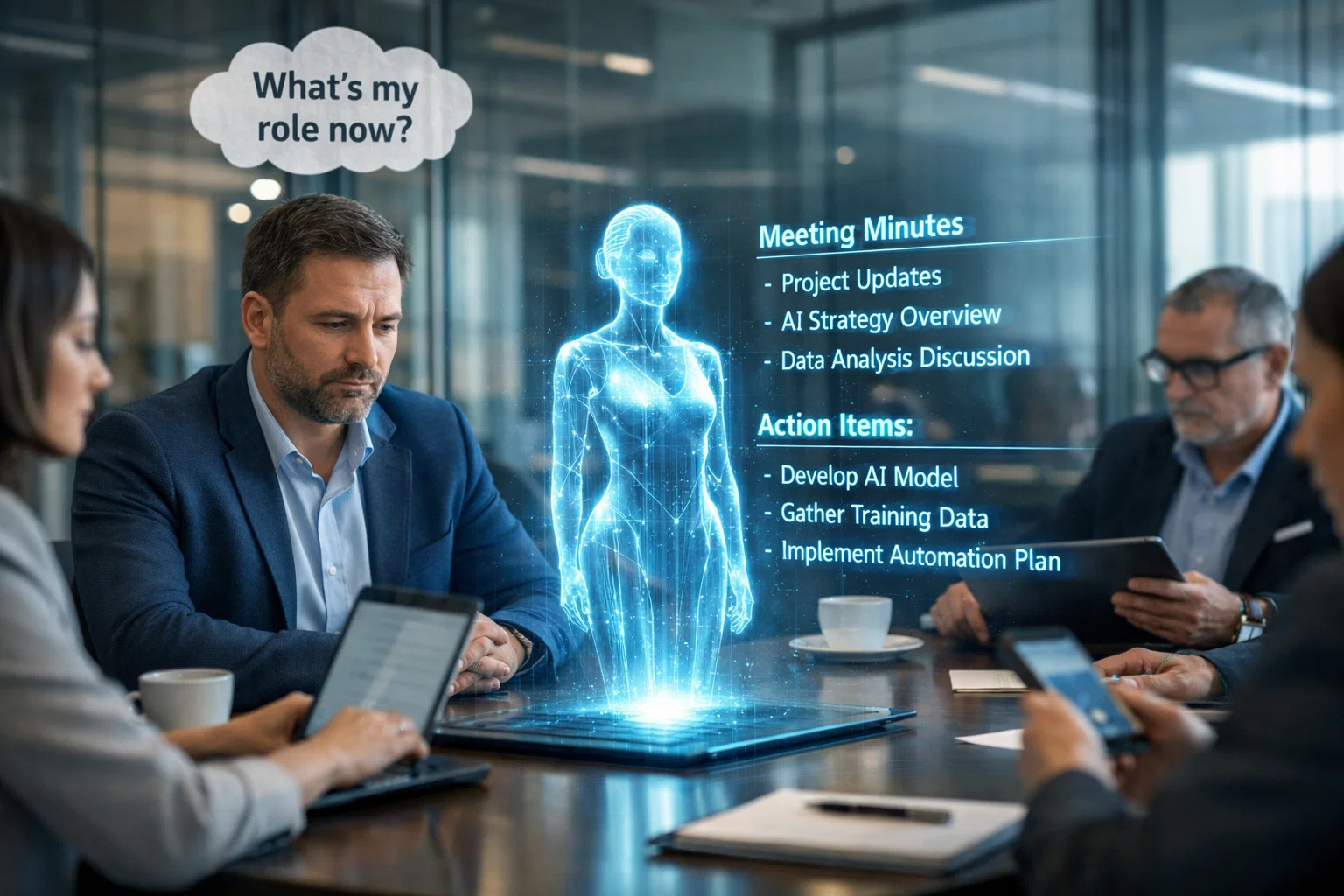
Client observation from Q4 2025:
"In meetings across three continents, Scrum Masters sat silently while AI agents generated minutes, identified action items, and distributed summaries. Their traditional coordination value was automated away."
The traditional Scrum Master role—built around facilitation, coordination, and impediment removal—is being transformed by AI agents. When GPT-4 can:
- Generate and distribute meeting notes in 30 seconds
- Identify action items with 95% accuracy
- Track dependencies across multiple projects
- Surface blockers before they impact delivery
...Scrum Masters are freed to focus on higher-value activities: coaching, mentoring, and strategic impediment removal. This isn't a threat—it's an opportunity. In our client implementations, we've seen Scrum Master administrative workload reduced by 70-80% within the first month of agentic AI adoption.
1.2 The Velocity Opportunity
Case Study: The 4-Hour Sprint
A client estimated a 2-week sprint for authentication system modernization. Our agentic team delivered in 4 hours.
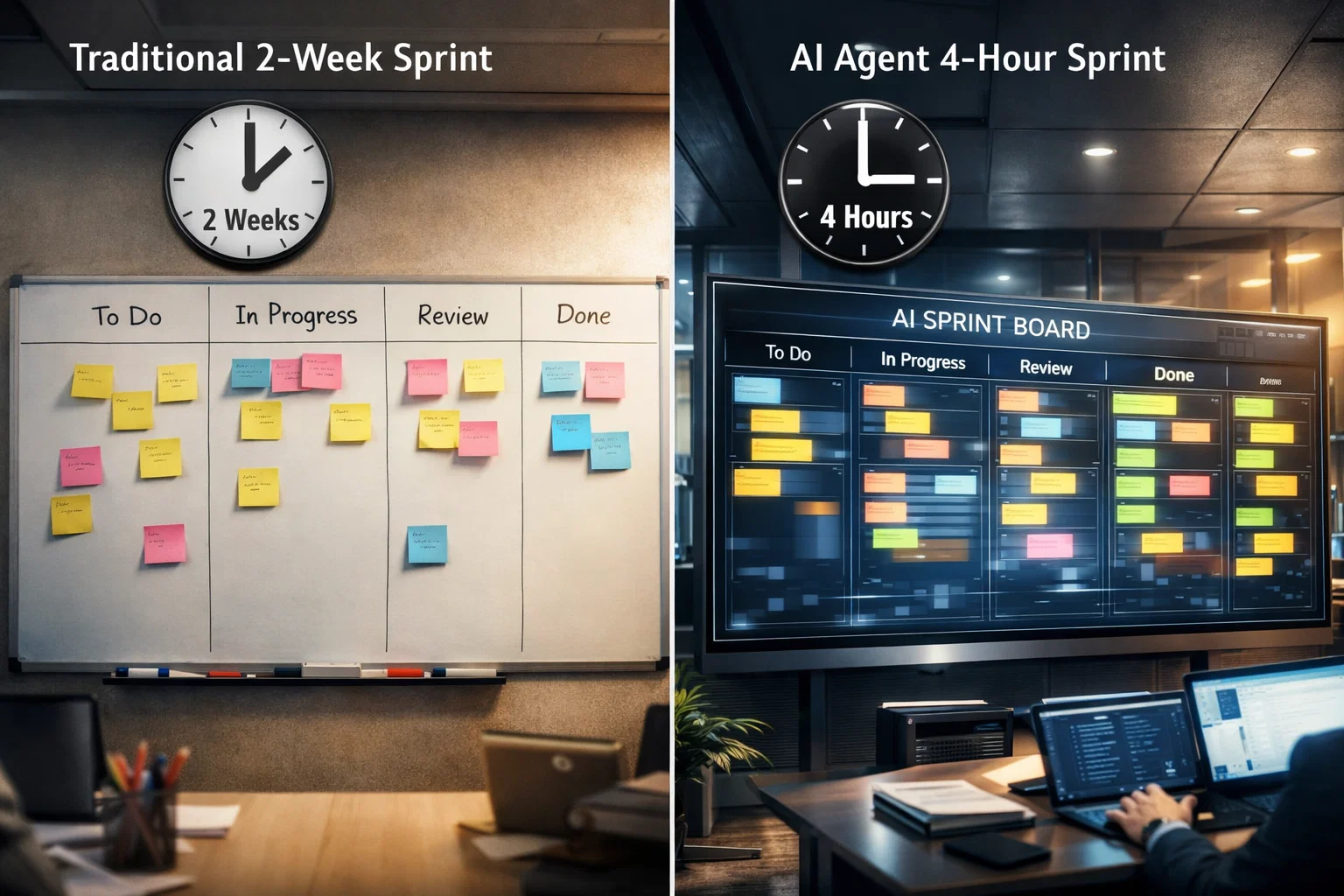
Fig 1.1: Velocity comparison showing traditional sprints vs. agentic continuous flow
When AI agents can complete work at this pace, traditional planning and measurement models invite us to rethink. Story points become less relevant when:
- Agents don't experience fatigue or context switching
- Multiple tasks execute in parallel without coordination overhead
- Technical debt accumulation follows different patterns
- Learning curves are measured in minutes, not months
1.3 Three Fundamental Shifts
| Agile 1.0 Assumption | Agent Reality | Opportunity for Evolution |
|---|---|---|
| Work is limited by human capacity | Agents scale horizontally | Rethink sprint planning as continuous flow |
| Quality improves with collaboration | Agents work independently | Redesign daily standups for hybrid teams |
| Progress is linear and predictable | Agents complete tasks in parallel | Evolve burndown charts to track agent+human work |
Key Insight:
These shifts aren't problems to fear—they're opportunities to evolve. Organizations that deployed agentic AI without adapting processes experienced confusion and misaligned priorities. Those that embraced process evolution saw 80% faster delivery.
What's Next?
The evolution point isn't coming—it's already here for teams using AI agents alongside Agile processes. In the next chapter, we'll introduce the Agile 3.0 framework—a practical path forward for hybrid human+agent teams that builds on what works in Agile 1.0 while embracing what's possible with AI.
Quick Poll
Which Agile 1.0 assumption shifts most significantly with AI agents?